
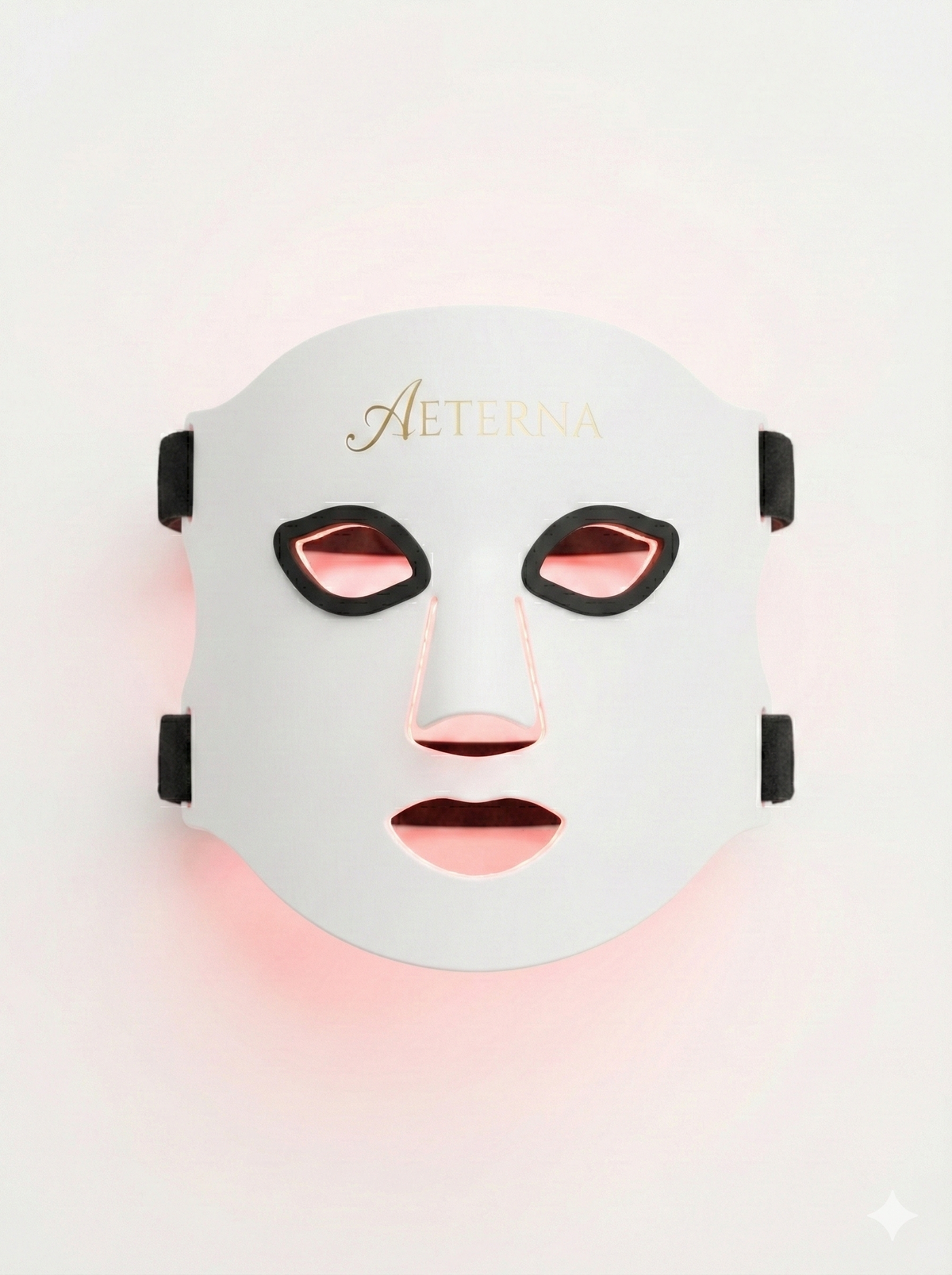
Red· 630–660 nm
Collagen and firmness.
The everyday setting. Red light is associated with collagen support and circulation — the foundation of skin that looks firmer, rested and lit from within.
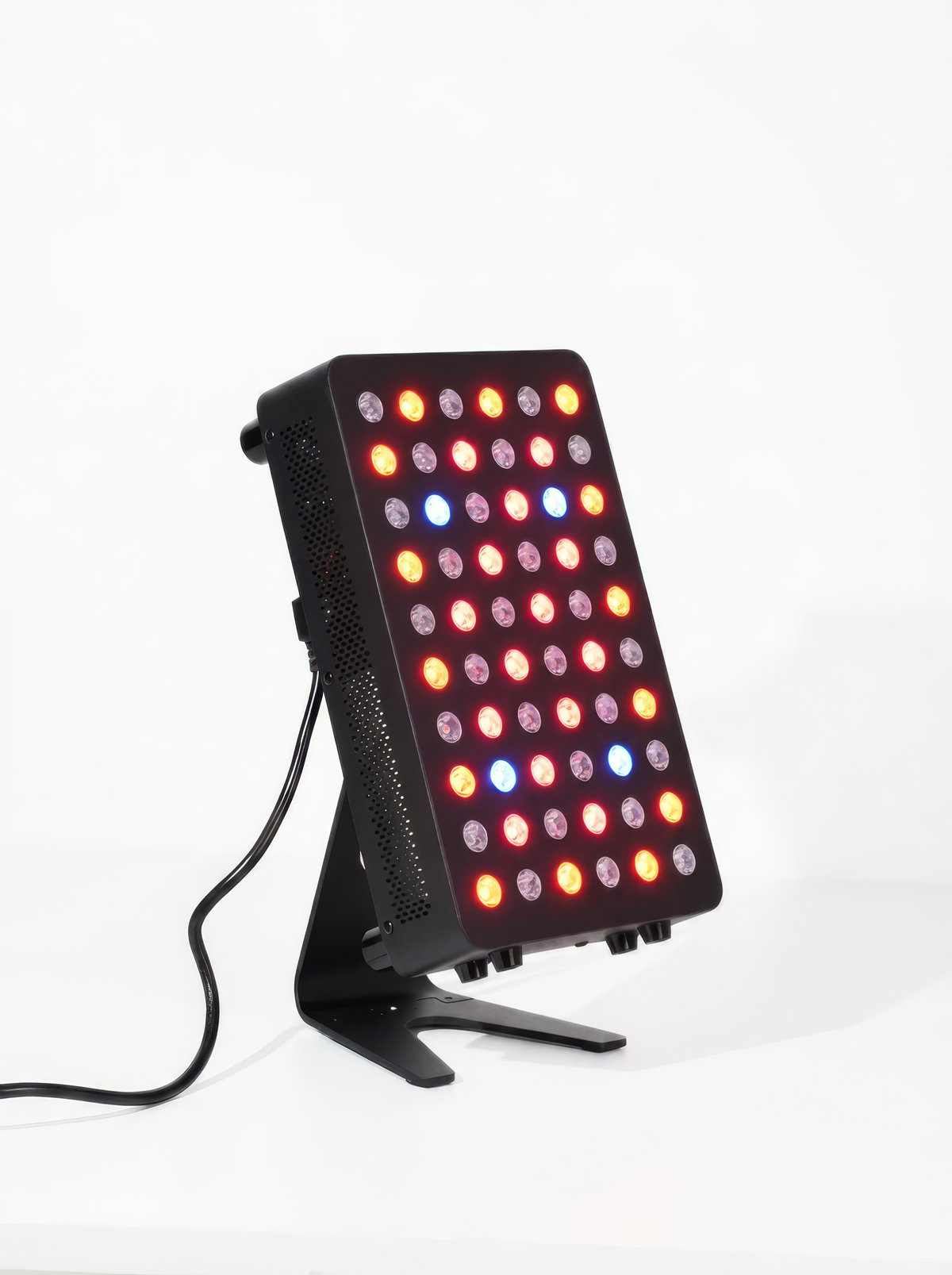
Aeterna™ Red Light Neck & Face Mask by vexaco

No heat, no UV, nothing stripped or injected. Specific wavelengths of light are absorbed by the skin’s own cells — and the cells do the rest.
Shop for skinRed light therapy is the everyday name for photobiomodulation: exposing skin to specific wavelengths of visible red and near-infrared light, at low intensity, for a few minutes at a time. There is no heat worth mentioning, no UV, and nothing is stripped, peeled or injected. The light is absorbed by the cells themselves, and the cells do the rest.
It is one of the few skincare technologies that started in clinics and hospitals and then moved into the home rather than the other way round. That history matters, because it means the questions worth asking — which wavelengths, how much, how often — already have answers.
Inside every skin cell are mitochondria, the structures that turn nutrients into usable energy (ATP). Red and near-infrared light happens to be absorbed by an enzyme in the mitochondria called cytochrome c oxidase. When that enzyme absorbs light in the 600–900 nm range, the cell's energy output rises for a while, nitric oxide is released, and local blood flow increases.
In skin, the cells that respond most visibly are fibroblasts — the cells that build collagen and elastin. When fibroblasts have more energy and better circulation, they are more active. That is the whole premise of red light therapy for skin: not adding anything from outside, but giving the skin's own repair cells the conditions to do their job.
Light doesn't do the work. It gives the cells that already do the work a better shift.
"Red light therapy" is shorthand. A well-designed mask uses several wavelengths, because each one reaches a different depth and interacts with a different target.
The workhorse. Red light reaches the dermis, where collagen is made, and is the most-studied wavelength for the appearance of fine lines, firmness and overall texture. If you only ever used one setting, it would be this one.
Blue light barely penetrates — which is the point. It is absorbed by porphyrins produced by the bacteria involved in breakouts, and that absorption is unfriendly to the bacteria. Blue is typically paired with red, which calms the redness that comes with a blemish.
Green sits between blue and red in depth. It is used for the look of uneven tone and dullness. The evidence base here is smaller than for red or blue, so we describe it as supportive rather than primary.
Invisible to the eye and the deepest-reaching of the group. Near-infrared is associated with recovery and calm — it is the setting for skin that looks stressed, and for the evenings after sun, wind or a long day.
A combined session that runs the whole range at once, for the nights you don't want to choose.
The clinical literature on light and skin is broader than most people expect. A few studies are worth knowing about, because they shaped how home devices are designed:
Two honest caveats. First, most studies use clinic-grade devices and defined schedules, so results at home depend on using the mask consistently. Second, light therapy supports the appearance and comfort of skin; it is not a treatment for any medical condition, and it does not replace a dermatologist.
The variable that matters most is not intensity. It is consistency. The studies above worked because people showed up several times a week for months.
Red, blue and near-infrared LED light contains no ultraviolet and, at the intensities used in home masks, does not burn or thin the skin. Aeterna's mask uses flexible medical-grade silicone with shaped eye openings, and the recommended session length keeps exposure well within the ranges used in published studies.
A few situations call for a conversation with your doctor or dermatologist first: pregnancy, a photosensitivity disorder, medication that increases light sensitivity, or an active skin condition under treatment. If a session ever feels uncomfortable, stop.
The Aeterna™ Red Light Neck & Face Mask brings all five wavelengths above into a single device that follows the contours of the face and neck, with ten-minute auto-timed sessions. It is the device we designed for exactly this ritual. See everything for skin in the Skin collection, or read on for how the same light works on hair and muscle recovery.
Aeterna™ devices are designed to support the appearance and comfort of skin, hair and muscle. They are not intended to diagnose, treat, cure or prevent any disease. Speak to a healthcare professional about any medical condition.
Each wavelength reaches a different depth and speaks to a different concern. Scroll to see how the light changes — and what each one is for.


The everyday setting. Red light is associated with collagen support and circulation — the foundation of skin that looks firmer, rested and lit from within.
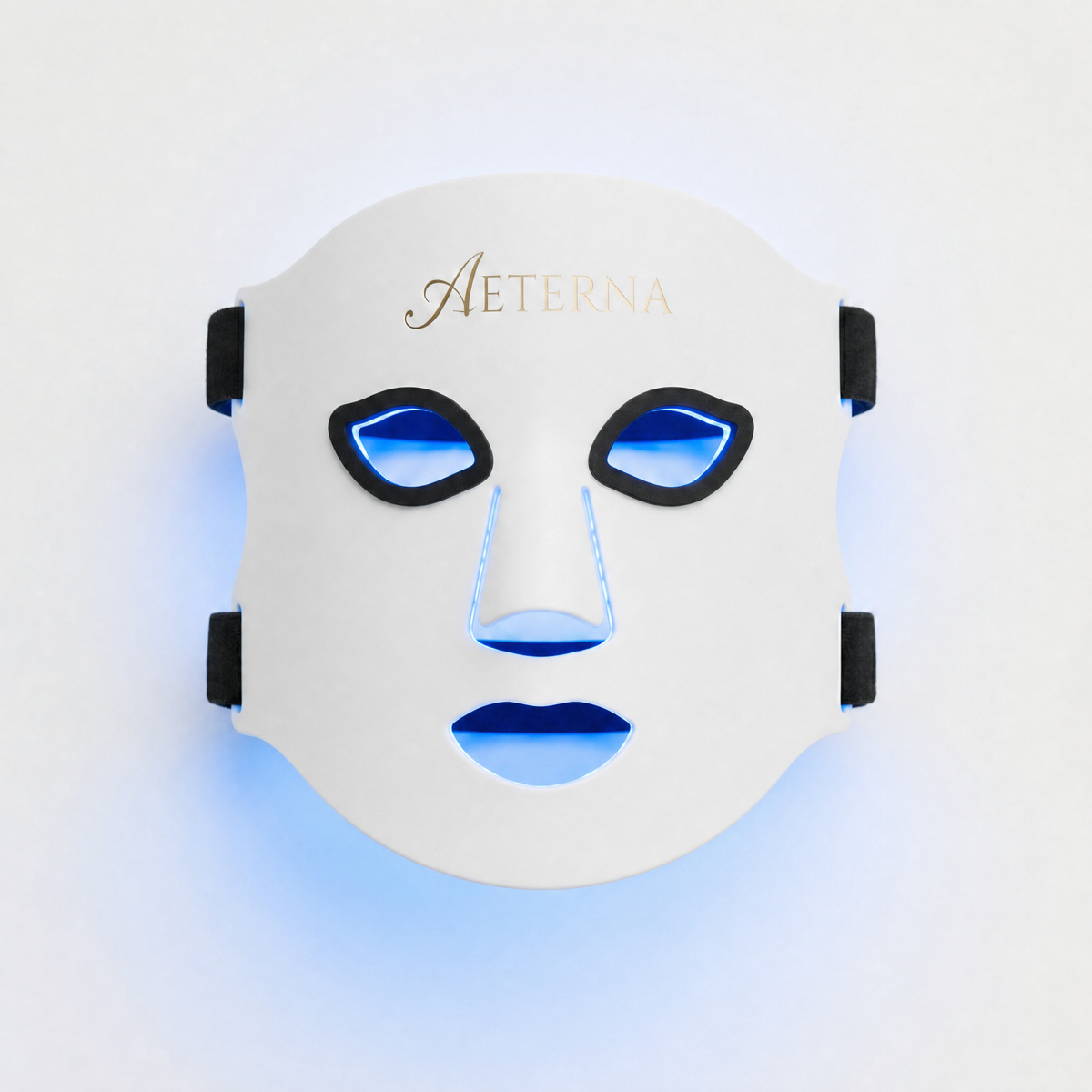
Blue light targets the bacteria involved in breakouts — for skin that looks clearer, and stays that way, without harsh actives.
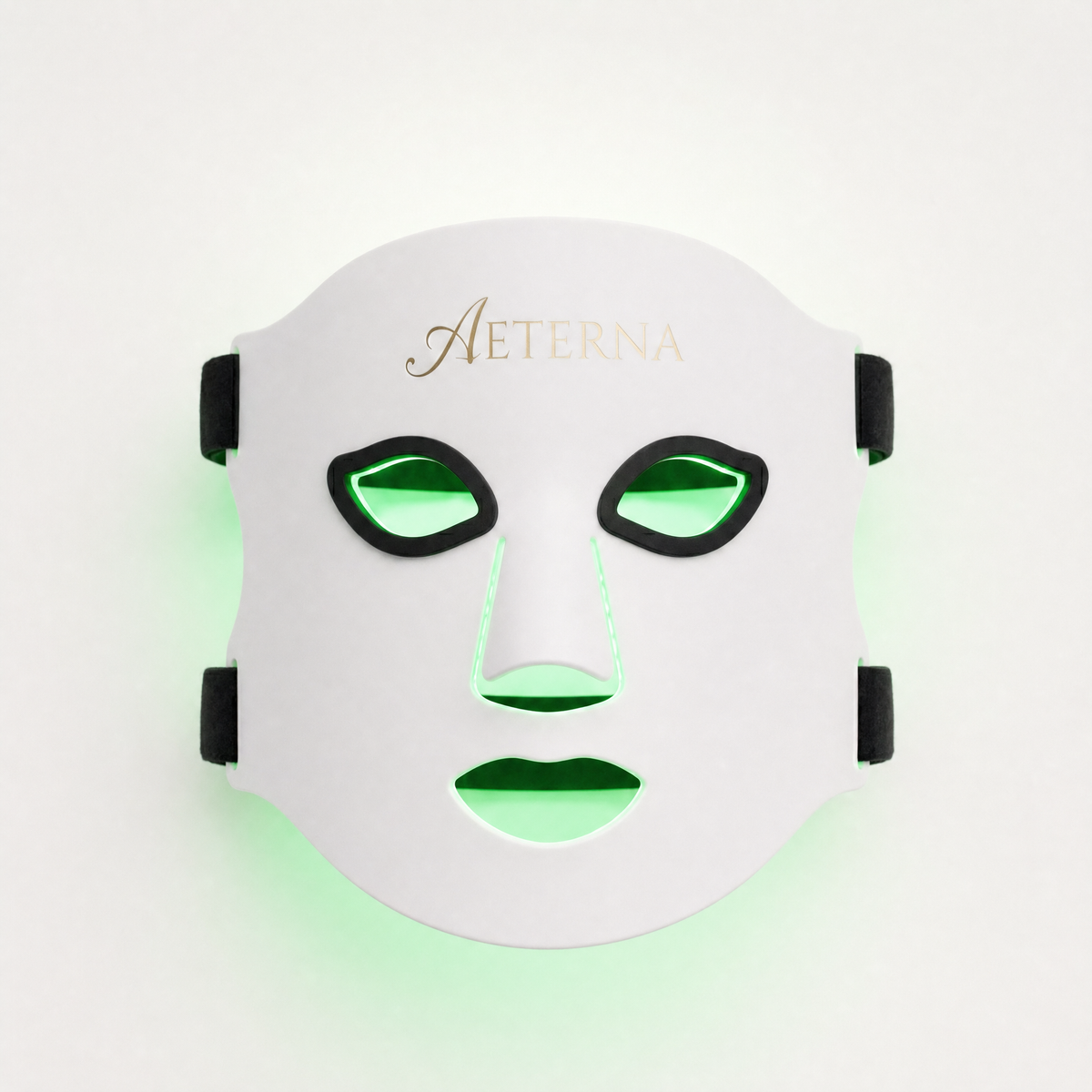
Green light works on pigmentation and uneven tone — the mode for sun spots, dullness and the kind of glow that doesn’t need a filter.
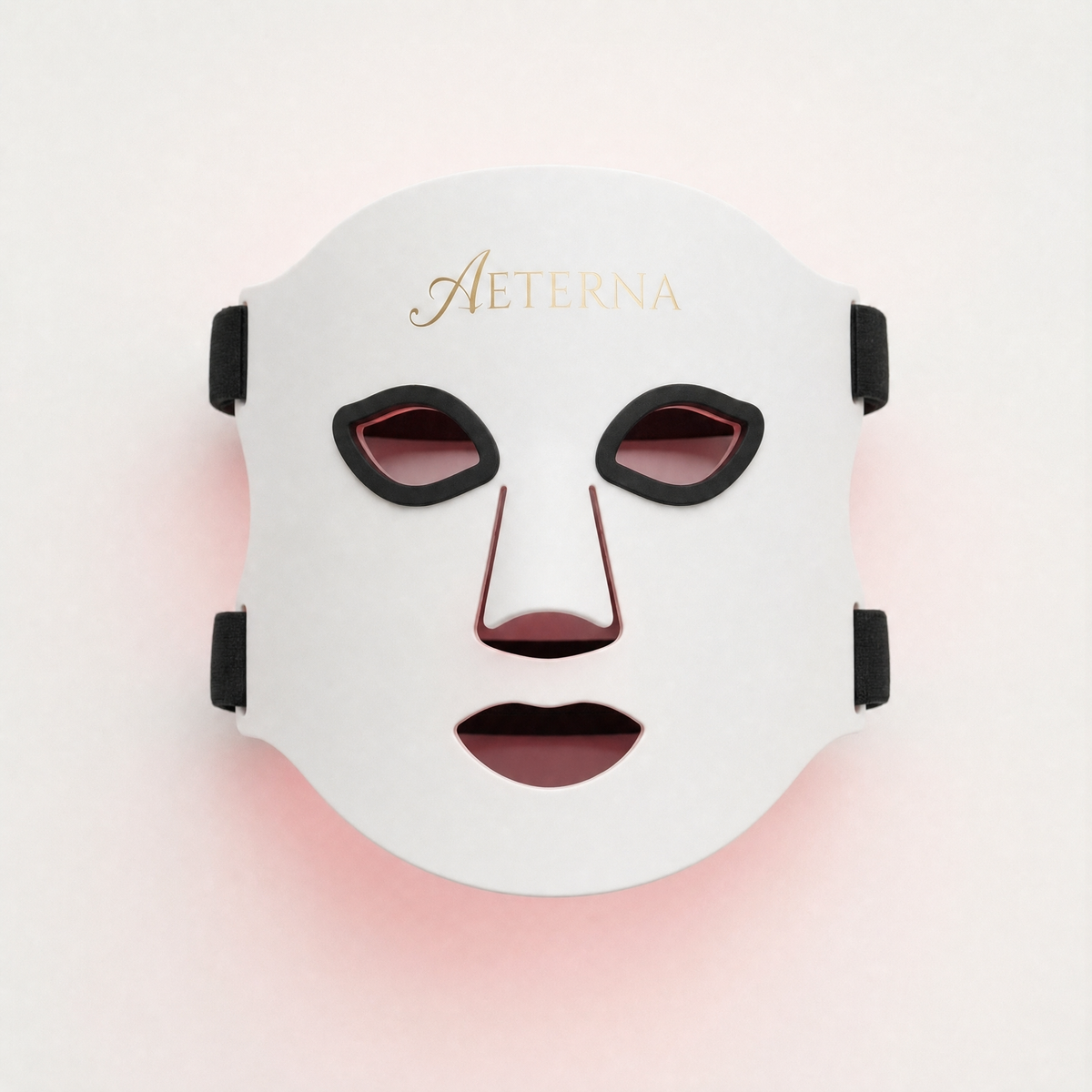
Invisible to the eye and the deepest-reaching of the five. Near-infrared is associated with recovery and calm — the mode for the evenings skin has had enough.
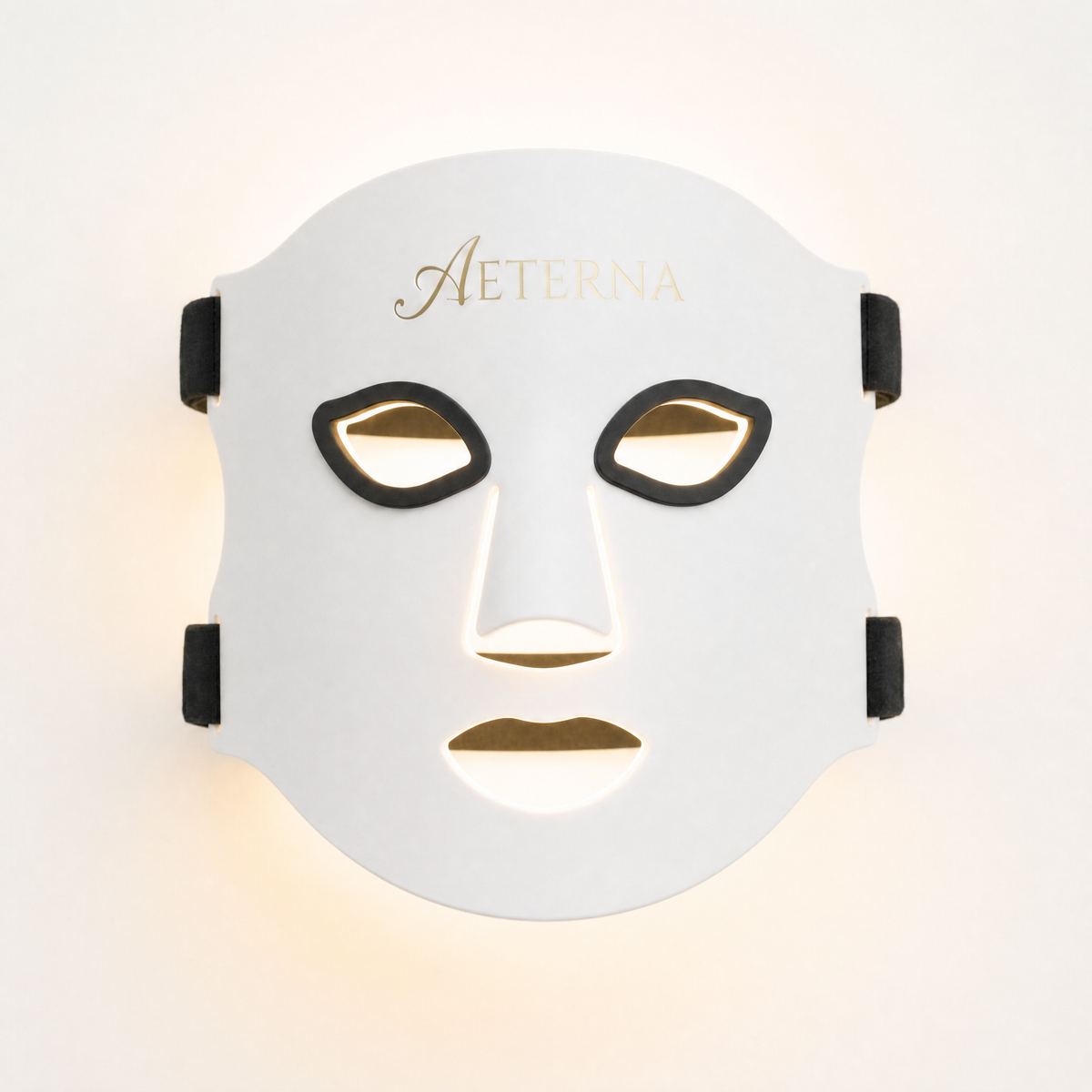
Full-spectrum white runs the whole range in a single session — the setting for the nights you don’t want to choose.
Real skin. Real time.
Thirty days of ten-minute evenings. No filters, no retouching — the same light, the same face.

Before

After
Real skin. Real time.
Thirty days of ten-minute evenings. No filters, no retouching — the same light, the same face.
92 %
of users reported smoother skin texture after consistent use.
87 %
reported improved skin radiance.

All five wavelengths above, in flexible medical-grade silicone that follows the face and neck, with ten-minute auto-timed sessions.


4.6★ from 468 reviews · 30-day guarantee · Free worldwide shipping
The questions we’re asked most on this topic.
Red (630–660 nm). It is the most-studied setting for firmness and texture, and the one to default to. Add blue on breakout evenings, green for tone, and near-infrared for calm.
Tone and texture usually first, within a few weeks. Firmness and fine lines over eight to twelve weeks of three to five sessions a week.
Yes, on separate evenings. Use the mask on clean skin, apply hydrating or peptide serums afterwards, and keep retinoids and strong acids to nights you don’t use light.
The mask’s silicone eye openings shape the light away from the eyes and the LEDs contain no UV. Keep your eyes closed during a session; if you have a photosensitivity disorder or eye condition, ask your doctor first.
Ten minutes an evening, between your cleanser and your serum.
Shop the mask