Muscle recovery is mostly a story about blood flow, energy and inflammation. Training creates small amounts of damage in muscle fibres; the body repairs them, and the repair is where strength comes from. What decides how you feel the next morning is how quickly the repair gets its supplies and how well the inflammation that goes with it is kept in proportion.
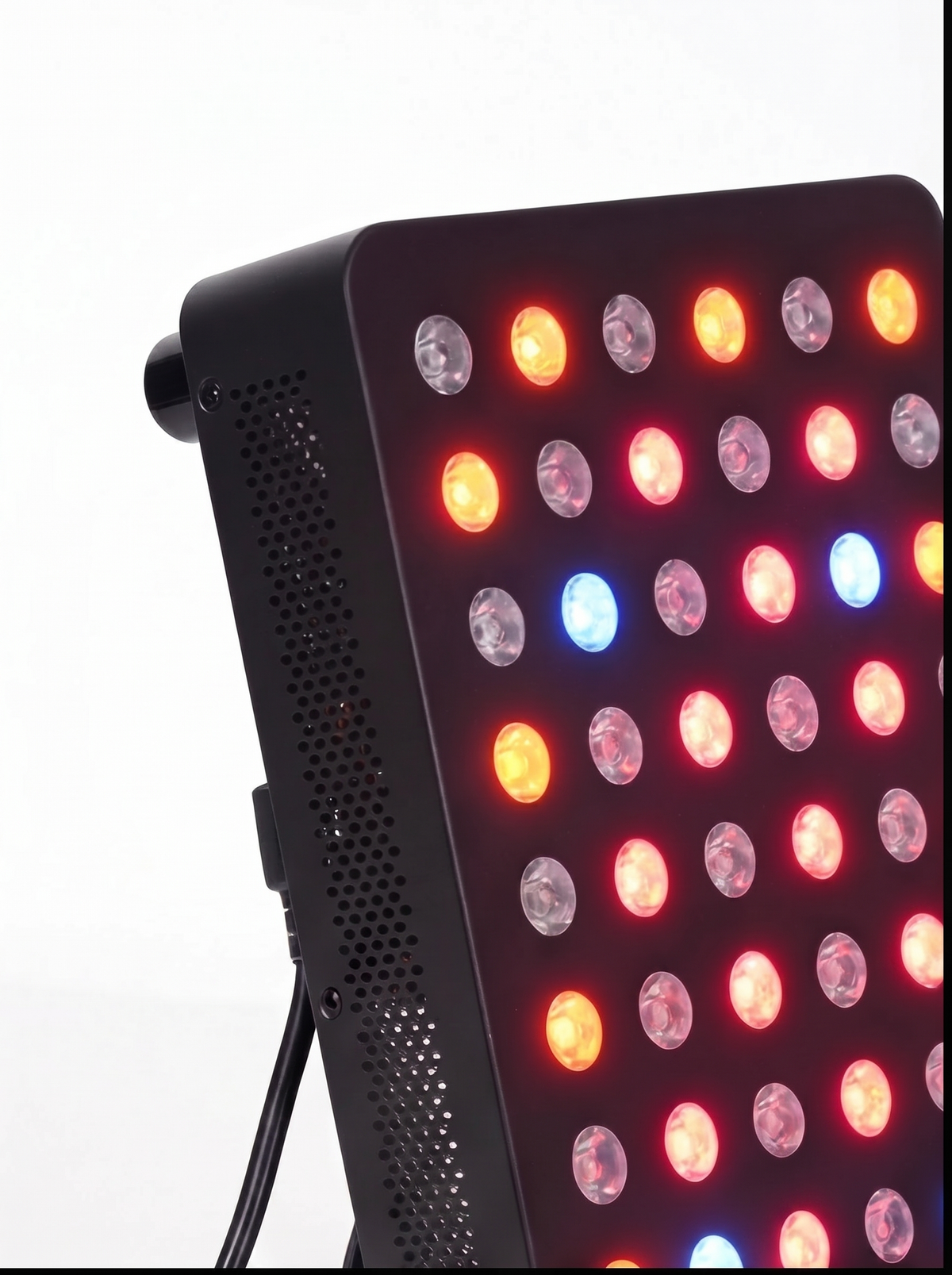
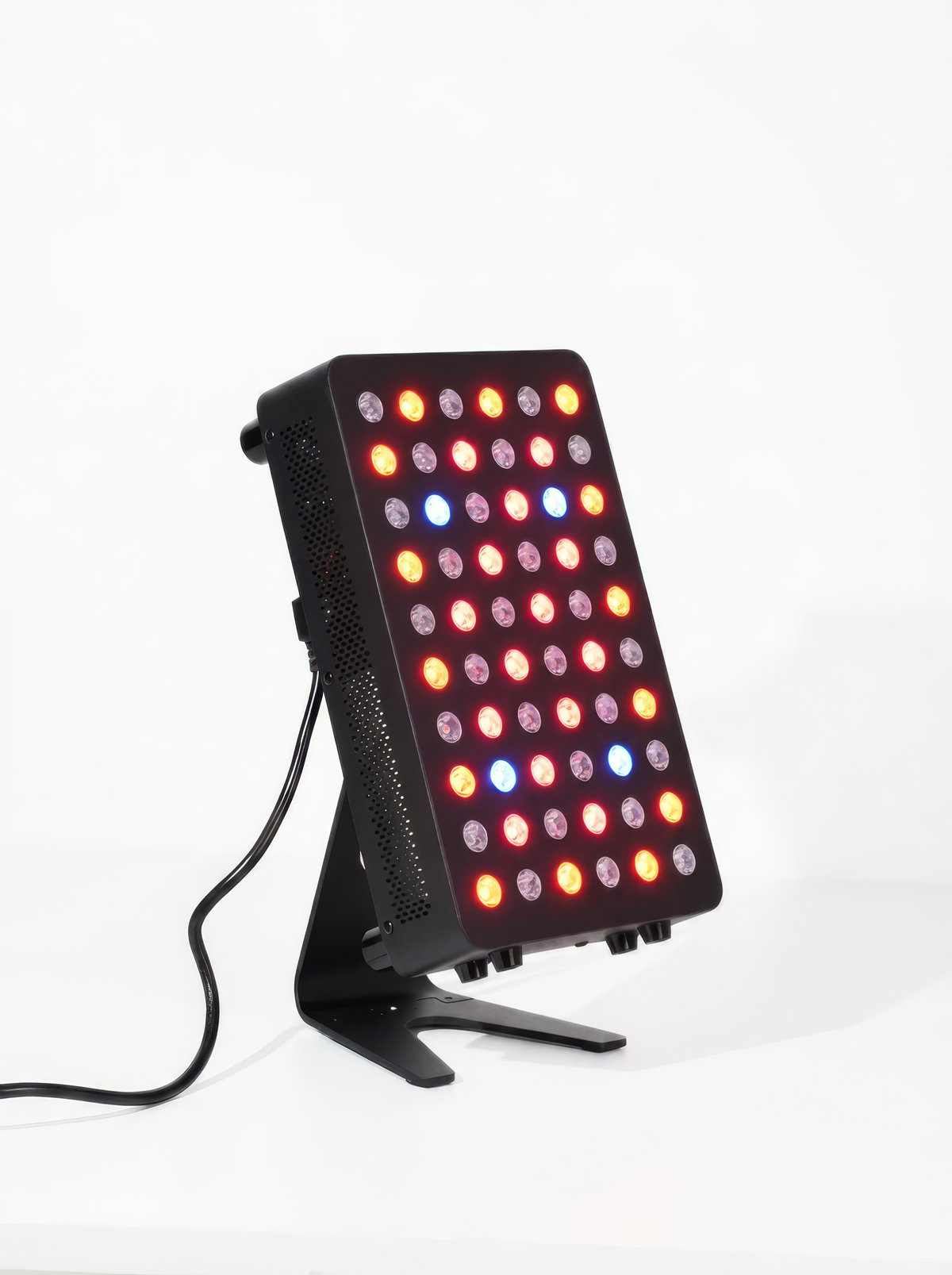
Red and near-infrared light — photobiomodulation — has been studied for exactly that stage. Athletes and physiotherapists began using it before it reached the home, and the panel is the format that brought it there: a flat array of high-output LEDs that can cover a shoulder, a thigh or a back in one session.
Why near-infrared matters for the body
Visible red light (630–660 nm) is absorbed within the first few millimetres of tissue, which is why it is the workhorse for skin. Near-infrared light at 810–850 nm is absorbed less readily by skin and water, so a useful portion of it travels further — into the muscle and connective tissue underneath.
Once absorbed, both wavelengths act the same way: they are taken up by cytochrome c oxidase in the mitochondria, energy (ATP) production rises, nitric oxide is released and local blood vessels widen. In a muscle that has just been worked, that means more oxygen and nutrients arriving, more waste leaving, and cells with the energy to repair.
Red light for the surface. Near-infrared for what's underneath. A good panel gives you both at once.
What the research suggests
- A 2015 systematic review and meta-analysis by Leal-Junior and colleagues examined trials of red and near-infrared light applied around exercise and found that light before or after training was associated with less muscle soreness and lower markers of muscle damage (such as creatine kinase) than sham treatment.
- A 2012 review by Ferraresi and colleagues summarised the mechanisms behind those results — improved mitochondrial function, reduced oxidative stress and better microcirculation — and noted that timing and dose both matter.
- Broader reviews of light and inflammation point the same way: consistent, moderate exposure appears to support the body's own regulation rather than override it.
The caveats apply here as everywhere. Study devices, distances and doses vary, results are measured over weeks of consistent use, and a panel supports comfort and recovery — it does not diagnose or treat injury, pain or any medical condition. Sudden or severe pain deserves a professional, not a device.
How to use a panel well
Panels are simple, but three variables decide whether you get the studied dose: distance, time and consistency.
-
Distance. Sit or stand roughly 15–30 cm from the panel. Closer delivers more light to a smaller area; further covers more with less intensity. Bare skin, not clothing.
-
Time. Ten minutes per area is a sensible session. Aeterna's panel times the session for you. More is not better; the dose response for light is a curve, not a line.
-
Consistency. Three to five sessions a week. Post-training or in the evening are the easiest habits to keep.
-
Eyes. The light is bright. Keep your eyes closed or look away when treating the face and upper body; the panel is not designed to be stared into.
The body's skin, too
A panel is a whole-body device in another sense: it reaches the skin on the chest, back, arms and legs that a face mask never touches. The same red light that supports collagen and tone on the face does the same on the décolletage and hands, which are usually the first places skin shows its age.
Panels, wands and everything in between
Handheld wands are precise and portable; panels trade portability for coverage and output, which is what recovery calls for. We compared the two formats in detail here. Before you compare irradiance numbers between brands, it is also worth reading why many "high irradiance" claims don't hold up.
Which Aeterna is for recovery
The Aeterna™ Red Light Therapy Panel combines red and near-infrared high-output LEDs in a tabletop panel with touch and voice control, a stand, and ten-minute auto-timed sessions. See it in the Recovery collection, or read how the same light works on skin and hair.