Hair grows in cycles. Each follicle spends years in a growth phase (anagen), then a few weeks winding down (catagen), then a few months resting (telogen) before it sheds and starts again. Thinning is rarely a story about hair falling out; it is usually a story about follicles spending less time growing and producing finer, shorter strands when they do.
Red light therapy for hair — sometimes called low-level light therapy, or LLLT — is built around that cycle. Its aim is to support the follicles that are still active, encourage them to stay in the growth phase longer, and improve the environment they grow in.
What red light does at the follicle
The mechanism is the same one that makes light useful for skin. Red light in the 650–660 nm range is absorbed by an enzyme in the mitochondria of scalp and follicle cells, which increases the cells' energy output and releases nitric oxide, a signal that widens local blood vessels. More energy and more blood flow at the base of the follicle means more of what a growing hair needs: oxygen, nutrients and a longer anagen phase.
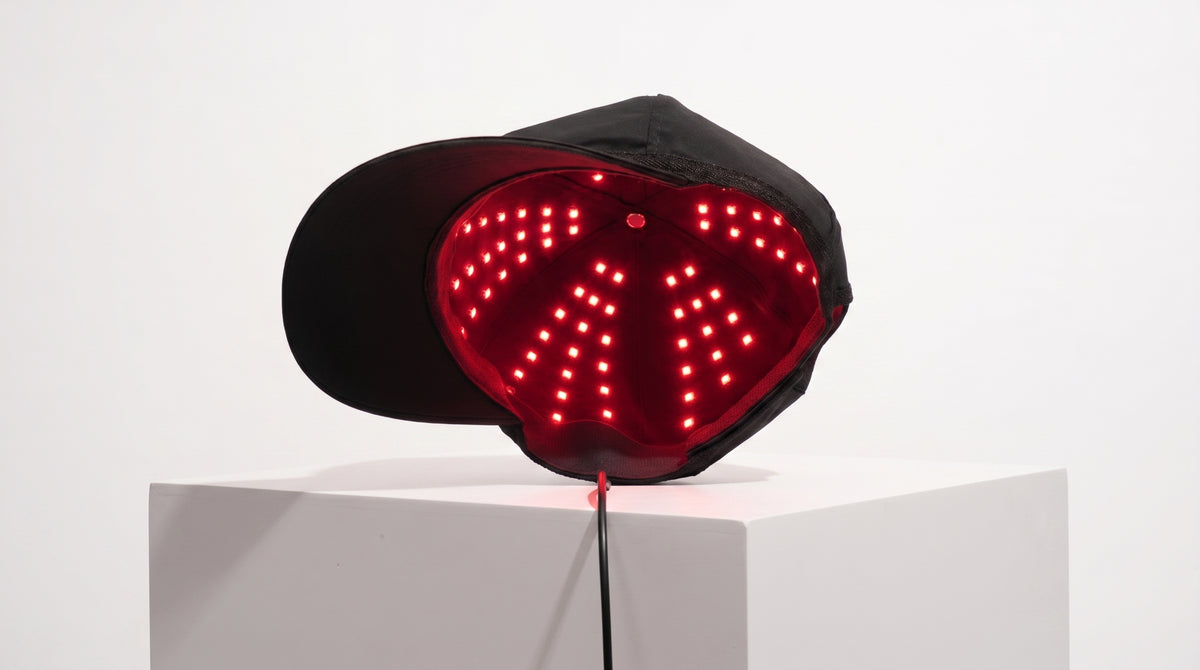
Near-infrared light at 850 nm penetrates further than red. In a cap, it reaches deeper into the scalp tissue that surrounds the follicles and supports the same circulation and cellular activity a little further down.
The follicle isn't broken. It's under-resourced. Light changes the resourcing.
What the research suggests
Hair is one of the better-studied applications of light therapy, largely because the outcome — hair count per square centimetre — is easy to measure.
- A pair of randomised, sham-controlled trials published by Jimenez and colleagues (2014) tested a 655 nm device on men and women with pattern thinning over 26 weeks and reported meaningful increases in hair density compared with sham devices.
-
Lanzafame and colleagues (2013, 2014) ran sham-controlled helmet studies in men and then women using 655 nm light every other day for 16 weeks and found increased hair counts in the treated groups.
- A 2017 systematic review by Afifi and colleagues pooled the available trials and concluded that low-level light therapy appears to be a safe option for supporting hair growth, while noting that devices, doses and schedules vary between studies.
The consistent themes: devices in the 650–660 nm range, sessions of roughly 10–25 minutes, several times a week, and results measured over months rather than weeks. Aeterna's cap applies the same category of light at home. It is a wellness device for the appearance of hair and scalp, not a treatment for any medical condition, and it works best for people whose follicles are thinning rather than gone.
What to expect, and when
Hair operates on a slow clock, so expectations need to match it.
-
Weeks 1–8: nothing visible. Some people notice a little extra shedding as resting follicles are nudged into a new cycle; this is normal and settles.
-
Weeks 8–16: the first signs, usually along the part or hairline — new fine hairs, and existing hairs that look a little thicker.
-
Months 4–6: the changes most people are hoping for become visible in photographs. Continued use maintains them.
Take a photo of your part and crown in the same light before you start. Memory is a poor judge of gradual change; a photo every four weeks is a fair one.
How to use a cap well
-
Clean, dry hair. Products and oils on the scalp scatter light; use the cap after washing or on a clean scalp.
-
Ten minutes, three to five times a week. Sessions are auto-timed. Consistency matters more than session length.
-
Hands-free. The cap is designed to be worn while you read, cook or answer email. A cap you actually wear beats a helmet you don't.
-
Keep going. Follicles respond to a routine, not a course. Once you see the change you want, keep the habit that produced it.
Who it is for, and who should ask first
Red light suits early and moderate thinning, post-partum or stress-related shedding once the cause has passed, and anyone who wants to look after the hair they have. It is less useful where follicles have been replaced by scar tissue, and it does not address underlying medical causes of hair loss. If you have a scalp condition, are on medication that increases light sensitivity, or your hair loss is sudden or patchy, see a doctor or dermatologist first.
Which Aeterna is for hair
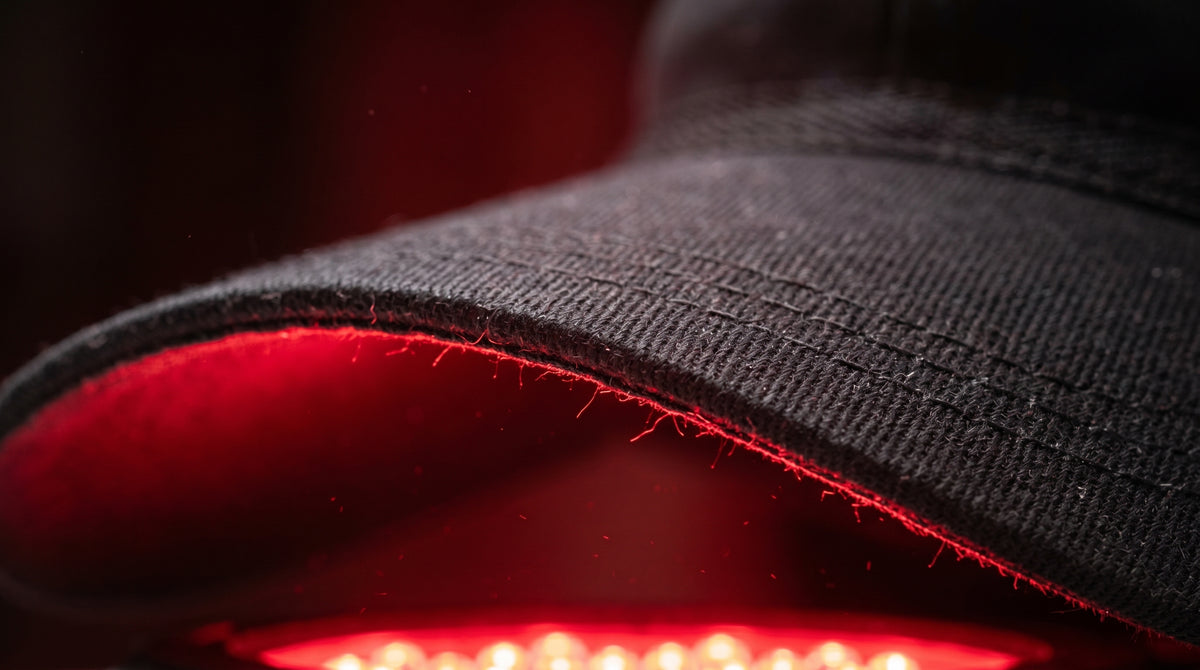
The Aeterna™ Red Light Therapy Cap pairs 660 nm red and 850 nm near-infrared LEDs in a lightweight, wearable design with 360-degree scalp coverage and ten-minute auto-timed sessions. See it in the Hair collection, or read how the same light works on skin and muscle recovery.